Last updated on April 5th, 2026 at 10:04 am
Korean Slangs and meanings are becoming increasingly popular as more people dive into Korean culture, dramas, and online communities. Understanding Korean Slangs and meanings helps you connect better with native speakers and enjoy conversations more naturally. In this guide, we’ll break down the most common expressions and their real meanings so you can use them with confidence.
Whether you’re a K-culture fan or learning the language, knowing Korean Slangs and meanings makes everything feel more fun and authentic. These casual phrases can instantly upgrade your social interactions and boost your fluency. Let’s explore the most useful Korean Slangs and meanings you can start using today!
Definition & Meaning
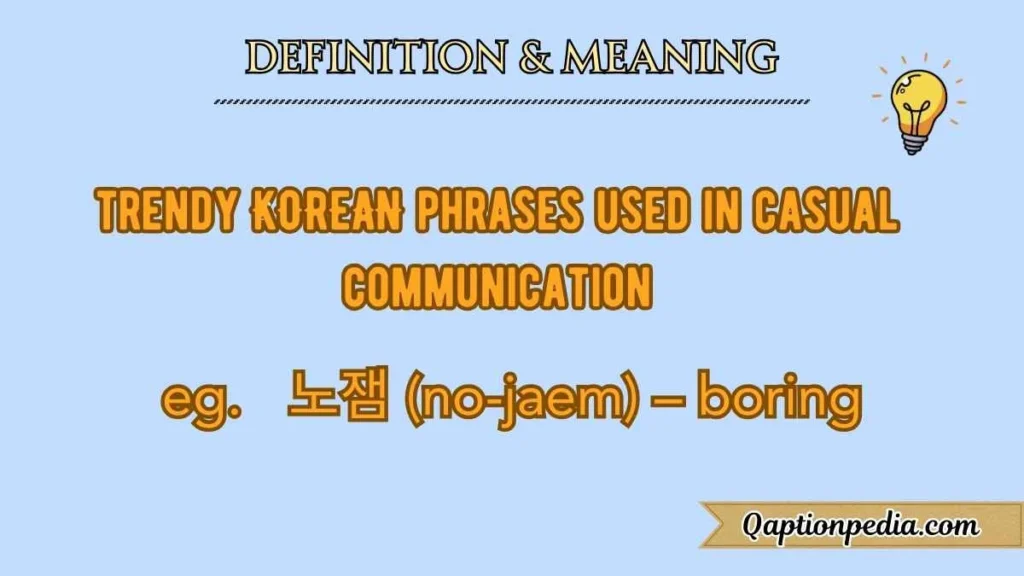
Korean slangs are informal expressions, shortened words, or trendy phrases used in casual communication. They are not part of formal Korean grammar but evolve from youth culture, social media, online forums, entertainment shows, and texting habits. These slangs often express emotions, exaggerations, humor, sarcasm, or modern lifestyle concepts in a quick and relatable way.
Examples include:
- 대박 (daebak) – amazing, wow, unbelievable
- 꿀잼 (kkul-jaem) – super fun
- 노잼 (no-jaem) – boring
- 심쿵 (sim-kung) – heart-fluttering
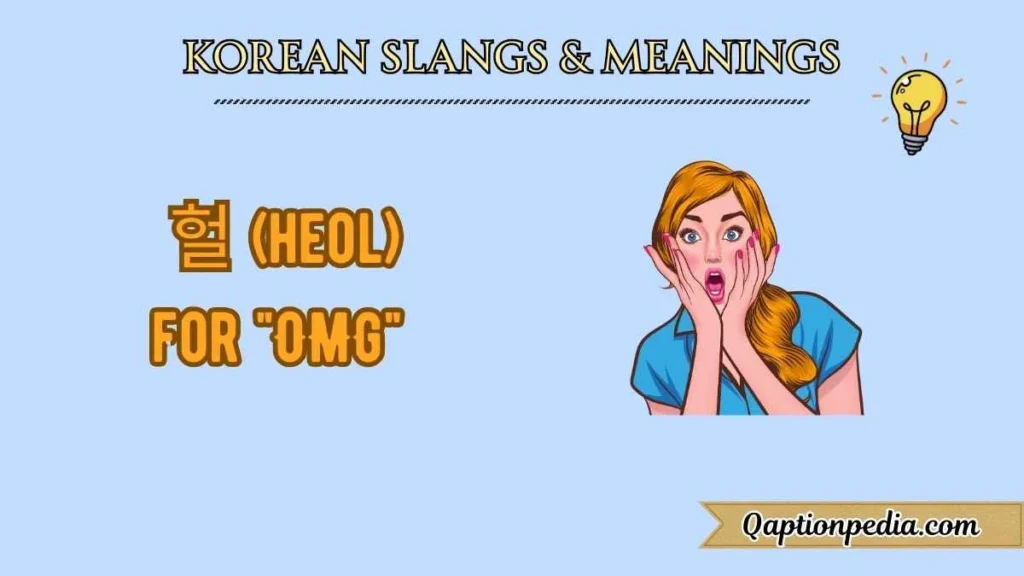
- 헐 (heol)-OMG
Understanding their meanings helps learners grasp subtle tones and social intentions behind everyday Korean communication.
Background & History
Korean slangs have a long cultural evolution rooted in generational language differences. Early Korean youth slangs emerged in the 1990s with the rise of online chatrooms and PC cafés. These digital spaces encouraged playful typing shortcuts and stylized expressions. As K-pop idols, TV personalities, and influencers gained global recognition, many slangs spread internationally.
By the 2010s, Korean entertainment exports amplified slang popularity. Expressions like “daebak” and “heol” appeared frequently in K-dramas, encouraging international fans to adopt them. Social media platforms further accelerated the spread of new phrases, making slang a dynamic, ever-changing part of Korean communication.
Today, slang reflects not only generational shifts but also societal humor, tech-driven creativity, and cultural trends. Understanding these origins adds deeper appreciation for how language adapts within Korean pop culture.
Usage in Various Contexts
Korean slangs are commonly used across:
1. Daily Conversations
Friends often use slangs to express emotions quickly and casually, such as reacting with “헐” or “대박.”
2. Texting & Messaging Apps
Shortened expressions like “ㅇㅋ” (OK) and “ㅁㅈ” (맞아) are typical in KakaoTalk chats.
3. K-pop Fandoms
Fans use slangs like 입덕 (ip-deok) meaning to start liking an idol or 탈덕 (tal-deok) to quit fandom life.
4. Online Gaming
Gamers frequently use terms like OP or 캐리 (carry) mixed with Korean expressions.
5. Humor & Memes
Social platforms create viral slang that reflects cultural jokes, including expressions like 웃프다 (sad but funny).
The usage varies by age, formality, and setting, so understanding context is essential.
Common Misconceptions & Clarifications
- “All slangs are universal in Korea.”
Not true. Many are age-specific or trend-specific. - “Slang equals rude language.”
Not necessarily. Some slangs are friendly and playful, while others can be harsh. - “If a K-drama uses it, everyone does.”
Dramas sometimes exaggerate slang for comedic effect. - “Slang replaces formal Korean.”
Slang is mostly casual—never for business or formal events.
Clearing these misconceptions helps learners avoid awkward or inappropriate usage.
Similar Terms & Alternatives

Many Korean slangs have comparable expressions or milder alternatives. For example:
- 대박 → 굉장하다 (amazing)
- 헐 → 정말? (really?)
- 꿀잼 → 재미있다 (fun)
- 노잼 → 별로야 (not great)
Learning alternatives helps adjust your tone depending on whom you’re speaking to.
How to Respond to This Term
When someone uses Korean slang:
- Reply with similar casual expressions:
“대박!”, “헐 진짜?”, or “꿀잼이네!” - Use emojis or short phrases to match the tone.
- If unsure, respond politely with neutral terms like “아 그래?” (Oh really?).
Matching the speaker’s energy keeps the conversation natural and friendly.
Regional or Cultural Differences
Slang usage varies across:
Generations
Teens and young adults create the fastest-evolving slangs, while older generations use more traditional idioms.
Regions
Seoul-based slangs dominate nationwide due to media influence, but some regions have unique dialect-based expressions.
Social Circles
Gamers, students, and fandom communities each have their own slang sets.
Understanding these differences helps you adapt more naturally.
Comparison with Similar Terms
Korean slangs can be compared with:
Internet Slang in Other Languages
Like English “LOL” or “OMG,” Korean has ㅋㅋㅋㅋ (laughing) and 헉 (gasp).
Japanese & Chinese Slangs
Many East Asian slangs are short, expressive, and driven by digital culture.
Pop Culture Terms Worldwide
Trendy expressions spread similarly through social media, memes, and entertainment.
This comparison highlights how modern communication shapes language globally.
Usage in Online Communities & Dating Apps
1. Online Communities
Platforms like DC Inside, Twitter, or Naver create and spread viral slangs. Terms like 현타 (hyun-ta) meaning “reality hits” often emerge here.
2. Dating Apps
People often use playful slangs to appear friendly or charming:
- 심쿵 (heart flutter)
- 귀여움 폭발 (overflowing cuteness)
- 썸 (something relationship)
Understanding subtle shades helps avoid misunderstandings in romantic contexts.
Korean Slang Curse Words with Meaning
Korean slang curse words are often used casually among friends but can be offensive in formal situations. One common word is “씨발 (ssibal),” which is similar to saying a strong swear word like the F-word in English. Another is “미친놈 (michin-nom),” meaning “crazy guy,” often used jokingly but can be insulting. “개새끼 (gae-saekki)” literally means “son of a dog” and is quite harsh. Some curses are softened in slang, like “헐 (heol),” which expresses shock without being offensive. Koreans also use tone and context to change how harsh a word sounds. Many younger people use mild curse slang jokingly with friends. However, using these words with strangers can be seen as very rude. It’s important to understand cultural context before using them. Learning these helps you understand Korean media better.
Korean Slangs and Meanings in English
Korean slang has become popular worldwide thanks to K-pop and K-dramas. Words like “대박 (daebak)” mean “awesome” or “amazing.” “짱 (jjang)” is used to say something is the best. “헐 (heol)” expresses surprise, similar to “OMG.” Another common slang is “노잼 (no-jaem),” meaning “not fun” or boring. “꿀잼 (kkul-jaem)” is the opposite, meaning “super fun.” People also use “인싸 (insa)” for someone who is popular or outgoing. “아싸 (assa)” describes someone more introverted. These slangs are widely used in daily conversations and online chats. Learning them makes understanding Korean culture easier.
Funny Korean Slangs and Meanings
Korean slang can be really funny and creative. For example, “멘붕 (menbung)” means “mental breakdown” but is often used humorously. “갑분싸 (gapbunssa)” describes when a fun mood suddenly becomes awkward. “웃프다 (utpeuda)” combines “funny” and “sad” to describe mixed emotions. “병맛 (byeongmat)” refers to something so weird that it’s funny. Another funny one is “TMI (too much information),” used the same way as in English. “현타 (hyeonta)” means a sudden reality check after excitement. These slang words often reflect relatable everyday situations. They’re popular among younger generations. Using them can make conversations more lively and entertaining.
Korean Slang Words in English
Many Korean slang words are now used globally in English conversations. Words like “Oppa” are used by fans to refer to older male idols. “Unnie” is used for older female friends or sisters. “Aegyo” refers to acting cute in an adorable way. “Maknae” means the youngest member of a group. “Fighting!” is used to encourage someone, similar to “you got this!” “Selca” means selfie and is widely understood. These words are often seen in K-pop communities. They’ve crossed language barriers and are used casually online. Understanding them helps you connect with global Korean culture.
Korean Slang Nicknames
Korean slang nicknames are often cute or playful. “남친 (namchin)” means boyfriend, while “여친 (yeochin)” means girlfriend. Friends might call someone “베프 (best friend).” “귀요미 (gwiyeomi)” means cutie or someone adorable. Another nickname is “훈남 (hunnam),” referring to a handsome guy. “훈녀 (hunnyeo)” is used for a pretty girl. Some nicknames are based on personality traits or habits. Others come from shortening longer words. These nicknames are commonly used in texts and social media. They add a friendly and personal touch to conversations.
Korean Slang Text
Korean slang in texting is full of abbreviations and shortcuts. For example, “ㅋㅋㅋ” represents laughter, similar to “LOL.” “ㅎㅎㅎ” is a softer version of laughter. “ㅇㅇ” means “yes,” while “ㄴㄴ” means “no.” “ㅂㅂ” stands for “bye-bye.” People also use “ㄱㄱ” to mean “go go” or let’s do it. These shortcuts make texting faster and more casual. Many come from Korean consonants rather than full words. They are widely used in chats and social media. Learning them helps you understand online Korean conversations better.
Funny Korean Words in English
Some Korean words sound funny or interesting when translated into English. For example, “눈치 (nunchi)” refers to the ability to read the room. “답정너 (dapjeongneo)” describes someone who already has a fixed answer and wants you to agree. “셀카 (selca)” means selfie, a mix of “self” and “camera.” “먹방 (mukbang)” refers to eating shows online. “치맥 (chimaek)” combines chicken and beer. These words often reflect unique cultural habits. They can sound amusing when explained literally. Many are now used internationally. They show how creative Korean language can be.
Korean Slang for Pretty Girl
Korean slang offers several ways to describe a pretty girl. “예쁨 (yeppeum)” means pretty in a general sense. “여신 (yeosin)” literally means “goddess” and is used for someone very beautiful. “훈녀 (hunnyeo)” refers to a naturally attractive girl. “존예 (jonye)” is slang for “super pretty.” “청순 (cheongsun)” describes a pure and innocent beauty. “귀요미 (gwiyeomi)” can also be used for someone cute and pretty. These words vary depending on context and personality. Some emphasize cuteness, while others highlight elegance. They’re commonly used in compliments and social media.Hidden or Offensive Meanings
Some slangs carry negative tones:
- 급식충 – derogatory term for young students
- 관종 – attention seeker
- 찌질이 – loser-like person
Use caution and avoid such terms unless you fully understand their implications. Slang can quickly turn offensive if used inappropriately.
Suitability for Professional Communication
Korean slangs are not suitable for:
- Job interviews
- Business emails
- Workplace communication
- Academic writing
Professionally, stick to standard Korean. Slangs are best reserved for friends, social media, or relaxed chats. Knowing when to switch tone shows cultural and linguistic awareness.
FAQs:
What does “대박” mean?
It means “amazing” or “unbelievable,” often used for excitement.
What is “헐” used for?
It expresses shock, disbelief, or surprise.
Are Korean slangs used in formal settings?
No, slangs are for casual communication only.
How fast do Korean slangs change?
Very fast—new ones appear annually through social media and pop culture.
Can non-Koreans use Korean slangs?
Absolutely, as long as you understand the meaning and context.
Are slangs the same as internet abbreviations?
Not exactly; some are slang, some are shorthand, though they often overlap.
Conclusion:
Korean slangs and their meanings offer a vibrant, expressive window into modern Korean culture.
Whether you’re watching K-dramas, chatting with friends, or exploring online communities, these informal expressions help you connect more naturally and understand emotional nuances.
By learning their origins, contexts, and appropriate usage, you can enjoy richer interactions and avoid misunderstandings.
Slang is fun, dynamic, and constantly evolving—making it one of the most exciting aspects of learning Korean today.