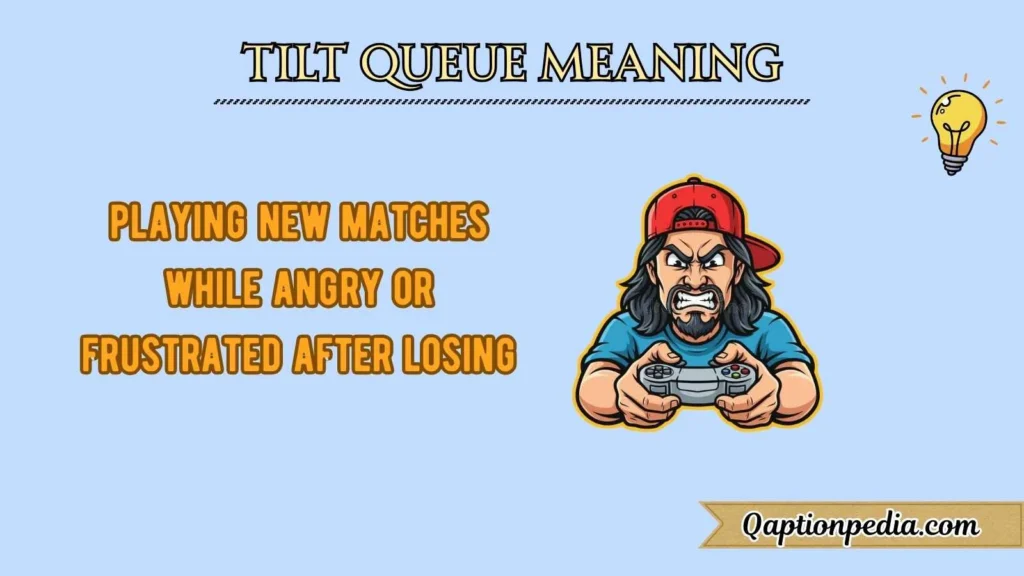
Tilt Queue Meaning refers to a situation commonly used in online gaming where a player continues to join matches while feeling frustrated, angry, or mentally tilted, often leading to poor performance. The Tilt Queue Meaning helps explain why emotions can directly affect gameplay and decision-making. Many gamers experience this without realizing its real impact.
Understanding Tilt Queue Meaning is important because tilt queuing usually results in more losses, bad choices, and increased stress. When players ignore tilt and keep playing, the Tilt Queue Meaning becomes a warning sign to pause, reset, and regain focus for better results.
Definition & Meaning
Tilt Queue Meaning refers to the situation where a player continues queuing for matches while emotionally tilted—usually angry, frustrated, or stressed after losing. “Tilt” describes the emotional imbalance, while “queue” refers to entering another match.
In simple terms, tilt queue means playing while upset, which often leads to poor decisions, reduced focus, and more losses. It’s not an official game mechanic but a psychological state widely recognized in gaming communities.
Background & History
The word “tilt” originated from poker culture, where players who lost emotional control made reckless bets. Over time, the concept moved into esports and online gaming. As ranked matchmaking became popular, players noticed patterns where emotional gameplay caused losing streaks.
The tilt queue meaning evolved naturally as gamers began warning each other not to queue while tilted. It became common advice in competitive games like MOBAs, FPS titles, and battle royales.
Usage in Various Contexts
Tilt queue is mostly used in:
- Competitive ranked gaming
- Esports discussions
- Streaming and content creation
- Team-based multiplayer games
Players may say, “I shouldn’t have tilt queued,” meaning they regret playing while frustrated. Coaches and streamers also use the term to explain performance drops.
Common Misconceptions & Clarifications
A common misconception is that tilt queue is a system punishment by the game. In reality, it’s not coded into matchmaking.
Another misunderstanding is thinking tilt only means anger. Tilt can include stress, overconfidence, sadness, or desperation. Any strong emotion that affects judgment can cause tilt.
Similar Terms & Alternatives
- Rage queue
- Loss spiral
- Mental boom
- Emotional queue
These terms all describe emotional states impacting performance, but tilt queue is the most widely accepted phrase.
How to Respond to This Term
If someone says you’re tilt queuing, the best response is to pause and reflect. Taking breaks, stretching, hydrating, or switching game modes can help reset your mindset. Recognizing tilt is the first step to avoiding it.
Regional or Cultural Differences
Tilt queue meaning is globally understood in gaming, but usage varies. Western gaming communities use it frequently, while some regions prefer local slang. However, the emotional concept remains universal across cultures.
Comparison with Similar Terms
Tilt queue differs from casual losing streaks. A losing streak can happen even with good performance, while tilt queue specifically involves emotional decision-making that worsens results.
Usage in Online Communities & Dating Apps
In gaming communities like Discord, Reddit, and Twitch, tilt queue is a common phrase. On dating apps, it’s rarely used seriously but may appear humorously in gamer bios to show self-awareness or personality.
Hidden or Offensive Meanings
Tilt queue has no offensive or hidden meanings. It is neutral slang and safe for general use. However, using it to mock someone aggressively can feel dismissive if not said respectfully.
Suitability for Professional Communication
The term is informal and not suitable for professional emails or formal writing. However, in esports coaching, gaming journalism, or casual team communication, it is perfectly acceptable.
FAQs:
What does tilt queue mean in gaming?
It means queuing for matches while emotionally frustrated, which often leads to poor gameplay.
Is tilt queue an actual game system?
No, it’s a psychological concept, not a built-in matchmaking feature.
Can tilt queue affect rank?
Yes, playing while tilted increases mistakes and can lead to losing rank.
How can I avoid tilt queue?
Take breaks, stop after losses, and reset your mindset before queuing again.
Is tilt queue only about anger?
No, it includes stress, sadness, overconfidence, or emotional pressure.
Is the tilt queue meaning negative?
It’s neutral and educational, often used as advice rather than an insult.
Conclusion:
Understanding the Tilt Queue Meaning helps gamers recognize how emotions influence performance. It’s not about skill alone but mental balance.
By identifying tilt early and knowing when to step away, players can improve consistency, enjoy gaming more, and protect their rank.
Emotional control is a hidden skill—and mastering it can be just as important as mastering the game itself.