Skill Issue Meaning is a phrase you’ve probably seen online, especially in memes, gaming chats, or social media comments. Understanding Skill Issue Meaning can help you decode these situations where someone points out a mistake or lack of ability. Many people use it casually, but it has a specific context and tone.
When exploring Skill Issue Meaning, it’s important to know it’s not always insulting—it can be funny, sarcastic, or playful depending on the conversation. This article will break down the true Skill Issue Meaning, show examples, and help you use it correctly. By the end, you’ll fully grasp why this term has become so popular online.
Definition & Meaning
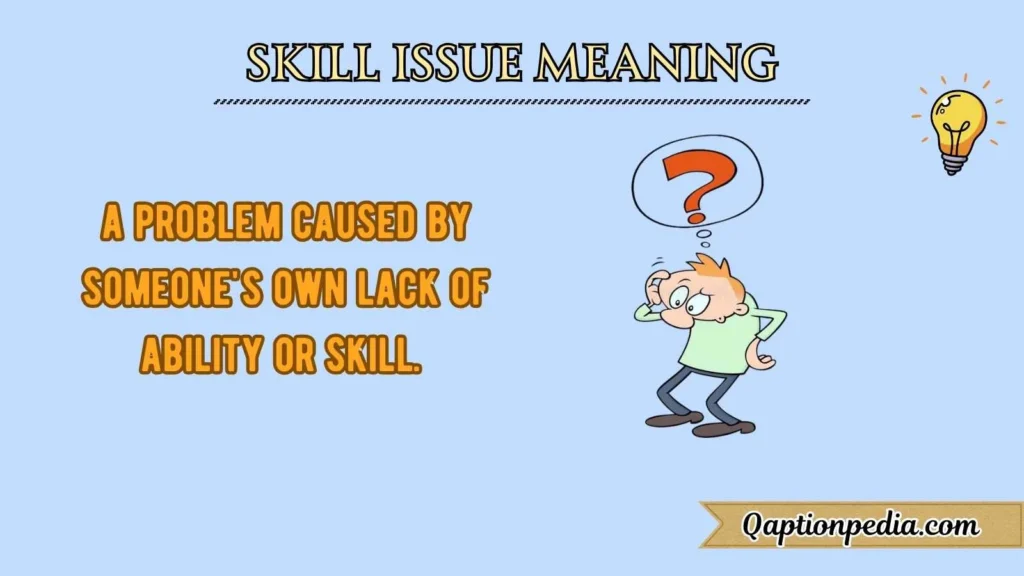
The Skill Issue Meaning is simple yet versatile. It indicates that a problem someone faces is due to their own lack of ability, competence, or expertise, rather than external circumstances. For example, if a player in an online game repeatedly loses to a certain challenge, another player might comment, “That’s a skill issue.”
Essentially, it is a casual, sometimes teasing, way of pointing out personal responsibility for mistakes. Unlike harsh criticism, it often carries a humorous undertone but can also be slightly sarcastic or blunt depending on context.
Background & History
The origins of the phrase can be traced to gaming and online forums in the early 2010s. Gamers often used it to explain why someone failed in multiplayer or competitive games, emphasizing that the loss was not due to luck or external factors but rather a personal lack of skill. Over time, the term moved beyond gaming and entered social media, memes, and general online banter. Its rise coincided with the culture of short, punchy internet phrases that quickly communicate a message in a humorous or ironic way.
Usage in Various Contexts
Skill Issue Meaning is most commonly used in:
- Gaming: To tease or critique players who struggle with a level, boss, or match.
- Social Media Memes: Often paired with images or videos of humorous failures.
- Daily Conversations: Used jokingly among friends to highlight mistakes.
- Online Challenges: Referencing someone’s inability to complete a task effectively.
It’s important to note that while the term is playful in casual settings, tone and relationship with the recipient are crucial.
Common Misconceptions & Clarifications
- Not Always Insulting: While it may seem like a criticism, context often determines whether it’s playful or mean.
- Not About Intelligence: It refers specifically to skill or ability, not overall intelligence.
- Not Limited to Gaming: Though it originated there, it now appears in memes, TikTok, and social media commentary.
Understanding these nuances prevents miscommunication.
Similar Terms & Alternatives
- User Error – More formal and widely recognized.
- Lack of Practice – Focuses on the absence of preparation.
- Amateur Mistake – Suggests inexperience.
- PWNED / Noob Move – Slang often used in gaming culture.
These alternatives can sometimes replace Skill Issue in a more professional or lighthearted way.
How to Respond to This Term
If someone uses the phrase toward you, consider:
- Laughing it off if it’s meant humorously.
- Acknowledging mistakes instead of reacting defensively.
- Using it yourself in playful banter.
Responding calmly often diffuses potential tension while maintaining social rapport online.
Regional or Cultural Differences
In English-speaking online communities, Skill Issue is widely understood. However, in non-English regions, direct translations may lose nuance or humor. Cultural attitudes toward teasing and sarcasm also influence how the phrase is received. Some cultures may find it rude, while others accept it as standard internet humor.
Comparison with Similar Terms
Compared to User Error, Skill Issue is more informal and playful. Unlike Beginner Mistake, it doesn’t imply inexperience, just insufficient skill at a particular moment. Its casual tone is often what makes it appealing in memes and online jokes.
Usage in Online Communities & Dating Apps
- Gaming Forums: Used to humorously critique gameplay.
- Social Media: Memes and TikTok content often revolve around funny “Skill Issues.”
- Dating Apps: Occasionally used jokingly when someone admits awkwardness or lack of skill in interactions.
The phrase’s humor makes it popular for lighthearted banter in almost any online space.
Hidden or Offensive Meanings
While generally playful, the phrase can sometimes feel condescending or dismissive. Using it with someone unfamiliar with internet humor may cause offense. Tone, relationship, and platform etiquette are key to avoiding misinterpretation.
Suitability for Professional Communication
Skill Issue is rarely appropriate in professional settings due to its casual, informal nature. It can be perceived as mocking, sarcastic, or unprofessional. Use alternatives like areas for improvement or development opportunity in workplaces or formal discussions.
FAQs:
What does Skill Issue mean in gaming?
It means a player’s failure is due to their lack of skill, not external factors.
Is Skill Issue offensive?
It can be, depending on tone and context, but it’s often used humorously.
Can Skill Issue be used professionally?
No, it is informal and better suited for casual or online settings.
Are there synonyms for Skill Issue?
Yes, terms like user error, amateur mistake, or lack of practice are alternatives.
Where did the term Skill Issue originate?
It originated in online gaming communities and spread to social media and memes.
How should I respond to Skill Issue online?
Laugh it off, acknowledge mistakes, or reply playfully without taking offense.
Conclusion:
The Skill Issue Meaning is a modern, internet-driven expression highlighting personal responsibility for mistakes or failures.
Popular in gaming, memes, and online banter, it can be playful, sarcastic, or slightly critical depending on context.
Understanding its origins, uses, and nuances ensures better communication and prevents misunderstandings.
While entertaining and widely recognized online, it’s best avoided in professional environments.
Embracing the humor behind Skill Issue allows users to navigate digital conversations with confidence, wit, and awareness of social cues.