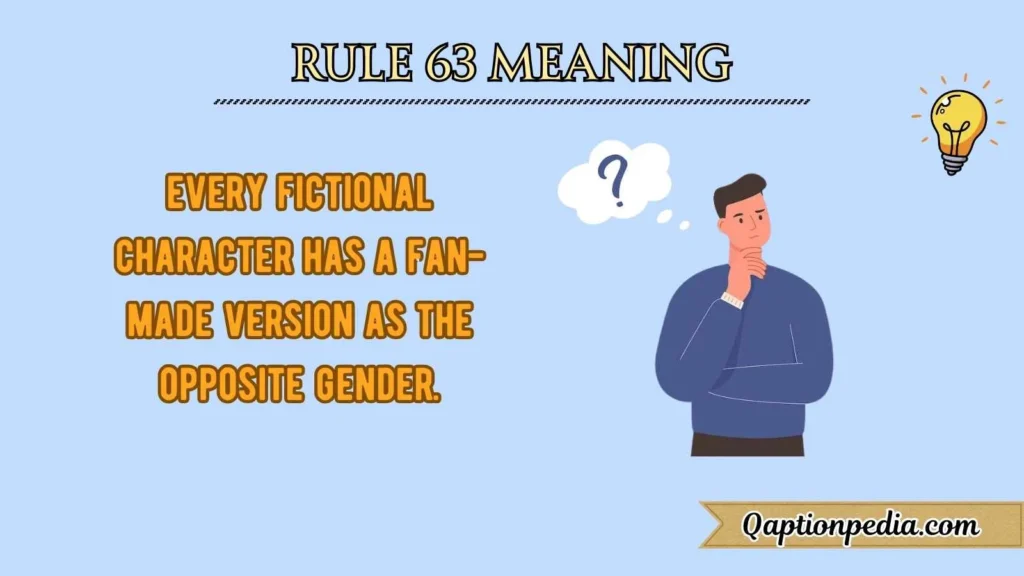
Rule 63 Meaning refers to a popular internet concept that suggests every fictional character has a gender-swapped version, regardless of their original gender. This idea is widely used in online culture, anime fandoms, and creative communities, where fans reimagine characters in new and exciting ways. Understanding Rule 63 Meaning helps explain why gender-bent art and stories are so common online.
Rule 63 Meaning also highlights the internet’s love for creativity, expression, and playful reinterpretation of characters. Over time, Rule 63 Meaning has become a recognized term across forums and social media, influencing memes, fan art, and discussions. Knowing the Rule 63 Meaning gives clear insight into how modern fandom culture works.
Definition & Meaning
Rule 63 meaning refers to an unofficial internet “rule” stating that for every fictional character, there exists a version of that character as the opposite gender. It does not imply canon or official changes but instead reflects fan creativity and imagination.
This rule is most commonly applied in fan art, comics, memes, and cosplay. Artists reinterpret characters by switching gender traits while maintaining recognizable personality, design elements, or story roles. Rule 63 is not about changing sexuality or identity; it is primarily a visual or conceptual transformation.
At its core, Rule 63 represents freedom of expression within online fandoms, allowing creators to experiment without limitations imposed by original source material.
Background & History
Rule 63 emerged from early internet meme culture, particularly from forums like 4chan and early fandom communities. It was part of a broader list of humorous “Rules of the Internet,” which were never official but widely accepted jokes.
As fan culture expanded on platforms like DeviantArt, Tumblr, Reddit, and later Instagram and Twitter, Rule 63 gained popularity. Gender-swapped characters became a creative trend, encouraging reinterpretations of famous heroes, villains, and even historical or pop culture figures.
Over time, Rule 63 evolved from a niche joke into a recognizable concept within mainstream internet culture.
Usage in Various Contexts
Rule 63 is commonly used in:
- Fan art and digital illustrations
- Memes and parody content
- Cosplay and roleplay communities
- Anime, gaming, and comic fandoms
Sometimes it is used humorously, while other times it is a serious artistic reinterpretation. The term can appear as a hashtag, caption, or comment to explain why a character looks different than expected.
Common Misconceptions & Clarifications
A major misconception is that Rule 63 promotes or enforces gender ideology. In reality, it is a creative trope, not a belief system.
Another misunderstanding is assuming Rule 63 content is official or canon. It is always fan-made unless stated otherwise.
Rule 63 is also not inherently sexual, although some content creators may choose adult interpretations, which are separate from the rule itself.
Similar Terms & Alternatives
Related concepts include:
- Genderbend
- Gender swap
- AU Alternate Universe
- Reimagined characters
While these terms overlap, Rule 63 specifically comes from internet rule culture rather than storytelling theory.
How to Respond to This Term
If someone mentions Rule 63:
- Acknowledge it as fan-made creativity
- Avoid assuming intent or ideology
- Respond casually in informal settings
Understanding the term helps prevent awkward or incorrect reactions online.
Regional or Cultural Differences
Rule 63 is more recognized in Western and global online fandoms. In some regions, similar ideas exist but without the same terminology.
Cultural attitudes toward gender expression can affect how Rule 63 content is received, ranging from playful acceptance to misunderstanding.
Comparison with Similar Terms
Unlike simple gender swap, Rule 63 implies inevitability and humor. It suggests that once a character exists, the alternate-gender version will eventually appear online.
Other terms may focus on storytelling, while Rule 63 emphasizes internet culture and creativity.
Usage in Online Communities & Dating Apps
In online communities, Rule 63 is a shared reference point. On dating apps or bios, it may be used humorously to signal fandom interests or creativity.
However, context matters, as not all audiences are familiar with the term.
Hidden or Offensive Meanings
Rule 63 itself is not offensive. Problems arise only when content is shared without consent, context, or respect for community guidelines.
Misuse can lead to confusion or discomfort, especially in professional or mixed audiences.
Suitability for Professional Communication
Rule 63 is not suitable for formal or professional communication. It is best reserved for casual, creative, or fandom-related discussions.
Using it in workplace settings may appear unprofessional or unclear.
FAQs:
What does Rule 63 mean in simple words?
It means a character can exist as the opposite gender in fan-made content.
Is Rule 63 an official rule?
No, it is an unofficial internet joke or concept.
Is Rule 63 offensive?
No, unless used disrespectfully or in the wrong context.
Is Rule 63 related to gender identity?
Not directly, it focuses on creative reinterpretation.
Where is Rule 63 most popular?
In anime, gaming, and online fandom communities.
Can Rule 63 be used professionally?
No, it is mainly for casual online use.
Conclusion:
Understanding Rule 63 meaning helps decode a popular aspect of internet culture rooted in creativity and humor.
It highlights how online communities enjoy reimagining characters without rigid boundaries.
While fun and expressive, Rule 63 is best used with awareness of context and audience.
Knowing its meaning allows users to engage confidently in fandom spaces while avoiding misunderstandings.