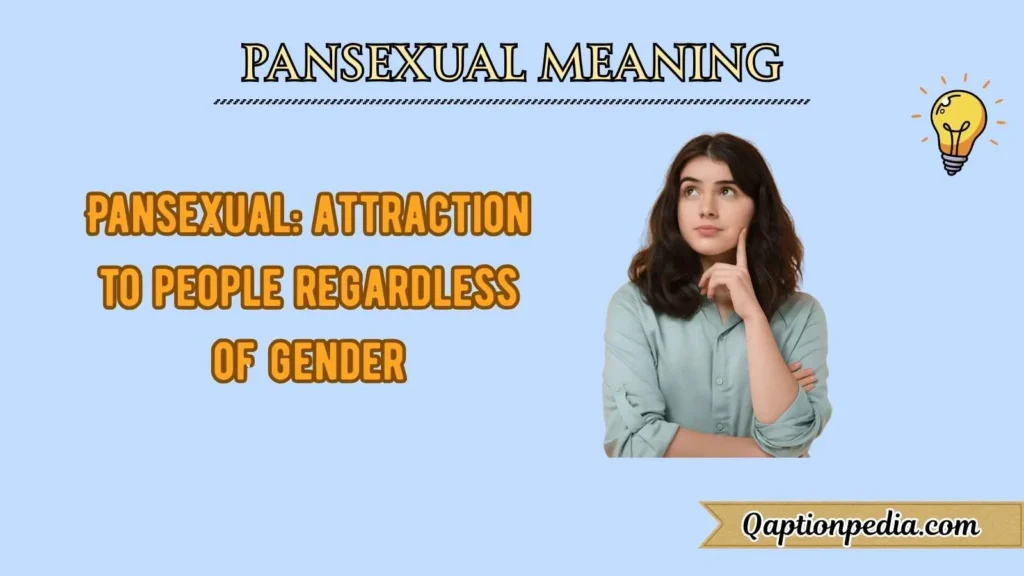
Pansexual Meaning is about understanding a sexual orientation where attraction goes beyond traditional gender boundaries. Pansexual Meaning focuses on emotional, romantic, or physical attraction to people regardless of their gender identity. This concept highlights inclusivity, openness, and attraction based on connection rather than labels.
Pansexual Meaning is often discussed in conversations about modern relationships and LGBTQ+ identities. Knowing the Pansexual Meaning helps clear confusion and supports acceptance, awareness, and respectful dialogue. In simple terms, Pansexual Meaning reflects love and attraction without limits.
Definition & Meaning
The pansexual meaning refers to a sexual orientation where a person feels attraction to others regardless of their gender identity or gender expression. The prefix “pan” comes from Greek, meaning all. In this context, it highlights that gender is not a limiting factor in attraction.
Pansexuality focuses on emotional, romantic, or physical connection rather than whether someone identifies as male, female, non-binary, transgender, or another gender identity. This does not mean pansexual people are attracted to everyone; rather, attraction is based on the individual, not their gender.
Many describe pansexuality as being “gender-blind” in attraction, though not all pansexual people prefer that phrasing. For some, gender is acknowledged and respected but not a deciding factor. Understanding the pansexual meaning is about recognizing diversity in how humans experience attraction.
Background & History
Although the term feels modern, the idea behind the pansexual meaning has existed for much longer. Early discussions around attraction beyond gender appeared in psychology and philosophy in the early 20th century. Over time, language evolved to better reflect lived experiences.
The word “pansexual” gained wider recognition in the late 20th and early 21st centuries, especially alongside LGBTQ+ advocacy movements. Increased visibility through celebrities, online communities, and educational platforms helped normalize the term.
As societies became more open to discussing gender diversity, pansexuality emerged as a clear way to describe attraction that transcends traditional gender categories. Today, the term continues to evolve, shaped by cultural context, personal identity, and ongoing conversations around inclusivity.
Usage in Various Contexts
The pansexual meaning appears in many settings, from casual conversations to academic discussions. On social media, people may use the term to describe their identity in bios or posts. In education, it’s often included in diversity and inclusion programs.
In personal relationships, someone may share that they are pansexual to explain how they experience attraction. On media and entertainment, characters or public figures identifying as pansexual help raise awareness and representation.
Understanding the context matters. In friendly settings, the term is often used openly and proudly. In formal or unfamiliar environments, people may choose whether or not to disclose their orientation based on comfort and safety.
Common Misconceptions & Clarifications
A common myth about the pansexual meaning is that it implies attraction to everyone. This is incorrect. Pansexual people, like anyone else, have preferences and boundaries.
Another misconception is confusing pansexuality with indecisiveness or experimentation. In reality, it is a valid and stable sexual orientation. Some also mistakenly believe pansexuality ignores gender entirely; for many, gender is recognized but not restrictive.
Clarifying these misunderstandings helps reduce stigma and supports respectful conversations.
Similar Terms & Alternatives
Terms often discussed alongside the pansexual meaning include bisexual, omnisexual, and queer. While related, each has its own nuance.
- Bisexual generally means attraction to more than one gender.
- Omnisexual indicates attraction to all genders, with awareness of gender differences.
- Queer is a broader, flexible term for non-heterosexual identities.
Choosing a label is personal, and some people may use multiple terms depending on context.
How to Respond to This Term
If someone shares that they identify with the pansexual meaning, a respectful response is simple: listen and acknowledge. You don’t need to fully understand to be supportive.
Phrases like “Thanks for telling me” or “I appreciate you sharing that” are appropriate. Avoid intrusive questions unless invited. Respect and openness go a long way.
Regional or Cultural Differences
Acceptance and understanding of the pansexual meaning vary globally. In some regions, the term is widely recognized and discussed openly. In others, it may be unfamiliar or misunderstood due to cultural norms.
Language, religion, and social attitudes influence how pansexuality is perceived. Online spaces often provide safer environments for expression where offline settings may not.
Comparison with Similar Terms
When comparing the pansexual meaning with bisexuality, the key difference lies in how gender factors into attraction. Pansexuality emphasizes attraction regardless of gender, while bisexuality may involve attraction to multiple genders in different ways.
Neither term is more inclusive or valid than the other. They simply reflect different personal experiences.
Usage in Online Communities & Dating Apps
On dating apps, users may list pansexual as their orientation to signal openness beyond gender categories. In online communities, the pansexual meaning helps people find like-minded individuals and supportive spaces.
Clear labels improve communication and reduce assumptions, especially in digital interactions.
Hidden or Offensive Meanings
The pansexual meaning itself is not offensive. However, misuse or mocking of the term can be harmful. Using it sarcastically or dismissively can invalidate identities.
Respectful usage depends on intent, tone, and context.
Suitability for Professional Communication
In professional environments, mentioning pansexuality is usually unnecessary unless relevant to diversity discussions. When it does come up, it should be treated neutrally and respectfully, just like any other identity-related term.
FAQs:
What is the simple pansexual meaning?
It means being attracted to people regardless of their gender identity.
Is pansexual the same as bisexual?
No, pansexuality focuses on attraction beyond gender, while bisexuality involves attraction to multiple genders.
Can pansexual people have preferences?
Yes, pansexual people can still have personal tastes and boundaries.
Is pansexuality a modern trend?
No, it’s an older concept with a newer, clearer label.
Is the term pansexual offensive?
No, when used correctly and respectfully, it is not offensive.
Do pansexual people date everyone?
No, attraction does not mean interest in everyone.
Conclusion:
Understanding the pansexual meaning helps create respectful, informed conversations about identity and attraction.
As language evolves, learning these terms supports empathy, inclusion, and clearer communication in both personal and social spaces.