Omds meaning is becoming increasingly popular across social media, texting, and online conversations, leaving many users curious about what it truly stands for. If you’ve seen this slang in chats or comments, understanding the omds meaning can help you stay updated with modern digital language and trends. This guide explains the real meaning, usage, and context in a simple way.
In today’s fast-moving online world, slang evolves quickly, and omds meaning reflects how people express surprise or strong emotions instantly. Knowing the omds meaning makes communication clearer and helps you connect better in online communities. Let’s explore how this expression is used and why it’s gaining attention online.
Definition & Meaning
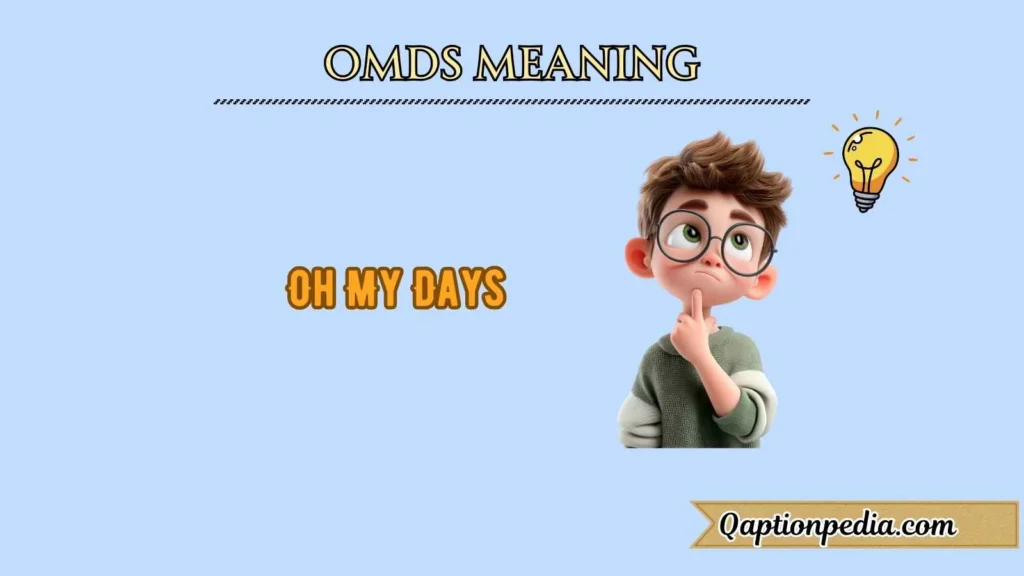
The OMDS meaning commonly stands for “Oh My Days.” It is an informal internet slang phrase used to express strong emotion such as surprise, shock, excitement, disbelief, or amazement. Similar to expressions like “Oh my God” or “Wow,” it acts as a reaction rather than a complete sentence.
People typically use OMDS when something unexpected happens or when reacting to surprising news. For example, someone might type OMDS after hearing exciting gossip, seeing an impressive achievement, or watching a dramatic moment online. The tone depends heavily on context — it can signal positive excitement or mild frustration.
Unlike formal abbreviations, OMDS belongs to conversational language. It reflects emotional spontaneity rather than structured communication. Because texting culture values speed and personality, abbreviations like OMDS help users react instantly without typing lengthy responses.
Another key aspect is emotional intensity. Writing OMDS often conveys stronger feelings than simply saying “okay” or “interesting.” It adds personality and emphasizes reaction, making conversations feel more expressive.
In written communication, capitalization sometimes increases emphasis. For instance:
- “omds” → casual reaction
- “OMDS!!!” → strong excitement or shock
Understanding the emotional purpose behind OMDS is essential because the meaning changes slightly depending on tone, punctuation, and context.
Background & History
The phrase behind OMDS originates from British informal speech. “Oh my days” has been used in spoken English, particularly in the United Kingdom, as a softer alternative to religious expressions like “Oh my God.” Over time, younger generations adapted the phrase into digital shorthand.
The rise of texting and social media during the early 2010s accelerated abbreviation culture. Messaging platforms encouraged shorter communication styles, leading users to compress common phrases into acronyms. OMDS emerged naturally within youth communities and quickly spread across online spaces.
Social media platforms played a major role in popularizing the expression. Viral videos, memes, and influencer conversations helped normalize its use. As global internet culture expanded, slang crossed borders easily, allowing OMDS to appear in conversations far beyond its original regional roots.
Gaming communities and group chats also contributed to its spread. Fast reactions during live gameplay or streaming environments encouraged expressive abbreviations, making OMDS a convenient emotional response.
Today, OMDS represents how spoken language evolves into digital slang. It demonstrates how culture, technology, and communication habits combine to create new linguistic trends that feel natural to online users.
Usage in Various Contexts
OMDS appears in multiple communication environments, each slightly changing its tone or intention.
Social Media:
Users post OMDS in comments reacting to surprising photos, announcements, or viral content. It often expresses admiration or disbelief.
Text Messaging:
Friends commonly use OMDS during casual chats when reacting to news or dramatic stories. It functions like an emotional reaction button.
Gaming & Streaming:
Players type OMDS when unexpected moments occur during gameplay, such as sudden wins or shocking losses.
Fan Communities:
Fans reacting to celebrity updates, show finales, or plot twists frequently use OMDS to share excitement collectively.
Humor & Memes:
Sometimes OMDS is used ironically or sarcastically to exaggerate reactions for comedic effect.
Because the phrase communicates emotion rather than information, its meaning depends on context and relationship between speakers. Among friends, it feels natural and expressive, while in unfamiliar or formal settings it may seem confusing.
Understanding context helps prevent misinterpretation. For example, OMDS can signal excitement in one conversation but disbelief in another.
Common Misconceptions & Clarifications
One common misunderstanding is assuming OMDS has a hidden or inappropriate meaning. In most cases, it is harmless slang expressing emotion rather than coded language.
Another misconception is that OMDS is universally understood. While popular among younger internet users, older audiences or professional communities may not recognize it.
Some people believe OMDS is always positive, but this is not entirely true. It can express:
- Excitement
- Shock
- Frustration
- Amazement
- Dramatic exaggeration
Tone and surrounding words determine the interpretation.
Additionally, OMDS is sometimes confused with technical acronyms or organizational abbreviations. However, in online conversations it almost always refers to emotional expression rather than a formal term.
Clarifying intent through context prevents communication misunderstandings and ensures messages are interpreted correctly.
Similar Terms & Alternatives
Many slang expressions serve a similar purpose to OMDS. These alternatives communicate surprise or emotional reaction in different styles.
Common equivalents include:
- OMG — widely recognized expression of surprise
- WOW — simple reaction to something impressive
- NO WAY — disbelief or shock
- I CAN’T — exaggerated emotional response
- OMD — shortened variation sometimes used online
Each alternative carries a slightly different tone. OMG is more global, while OMDS feels more conversational and stylistically British.
Choosing between them often depends on personal preference, audience familiarity, and platform culture. Younger users may prefer newer slang, while broader audiences understand traditional expressions more easily.
How to Respond to This Term
Responding to OMDS is simple because it functions as a reaction rather than a question.
Appropriate responses include:
- Asking what surprised them
- Sharing excitement (“I know, right!”)
- Adding more details to the conversation
- Reacting emotionally in return
Example:
Person A: “OMDS that ending was impulsive !”
Person B: “Right? I didn’t expect that at all.”
Matching the emotional tone keeps conversations natural. If unsure, replying with curiosity or agreement works well.
Avoid overly formal replies, as OMDS typically appears in relaxed communication settings.
Regional or Cultural Differences
OMDS is strongly associated with British youth culture but has expanded globally through internet influence. In the UK, the phrase feels natural and familiar, while in other regions it may sound trendy or imported from online culture.
In North America, users more commonly use OMG instead. Meanwhile, international audiences often learn OMDS through social media trends, music fandoms, or online communities.
Cultural interpretation also affects tone. Some cultures prefer expressive reactions, while others favor more reserved communication styles, influencing how frequently OMDS appears.
Despite regional differences, global internet culture continues blending slang expressions, making OMDS increasingly recognizable worldwide.
Comparison with Similar Terms
Comparing OMDS with similar slang helps clarify subtle differences:
- OMDS vs OMG: OMDS sounds softer and less religious in tone.
- OMDS vs WOW: WOW expresses admiration but lacks emotional drama.
- OMDS vs OMD: OMD is shorter but less expressive.
- OMDS vs I CAN’T: “I can’t” emphasizes emotional overwhelm rather than surprise alone.
OMDS stands out because it balances excitement, disbelief, and humor simultaneously. Its uniqueness lies in emotional versatility rather than literal meaning.
Usage in Online Communities & Dating Apps
In online communities, OMDS helps create emotional connection quickly. Users employ it to show genuine reactions, making conversations feel lively and relatable.
On dating apps, OMDS may appear when reacting to funny bios, surprising interests, or unexpected messages. It signals enthusiasm and engagement without sounding overly serious.
However, overusing slang early in conversations may confuse people unfamiliar with internet abbreviations. Moderation ensures communication remains clear and welcoming.
Online communities thrive on shared language, and OMDS acts as a social signal showing familiarity with digital culture.
Hidden or Offensive Meanings
Generally, OMDS does not carry offensive or inappropriate meaning. It is considered safe slang in most contexts.
However, misunderstandings can occur if someone interprets it as mockery or sarcasm. Tone indicators like emojis or additional text help clarify intent.
Unlike some internet acronyms that have double meanings, OMDS is typically straightforward and harmless. Still, awareness of audience sensitivity ensures respectful communication.
Suitability for Professional Communication
OMDS is best suited for informal conversations. In professional environments such as emails, academic writing, or workplace messaging, it may appear unprofessional or unclear.
Instead, formal alternatives should be used, such as:
- “That’s surprising.”
- “I’m impressed.”
- “This is unexpected.”
Using professional language maintains clarity and credibility. Slang should generally remain within casual or social settings where tone is relaxed.
FAQs:
What does OMDS stand for?
OMDS usually means “Oh My Days,” expressing surprise or excitement.
Is OMDS the same as OMG?
They are similar, but OMDS feels softer and more conversational.
Is OMDS rude or offensive?
No, it is generally harmless slang used casually online.
Who commonly uses OMDS?
Mostly younger users and social media communities.
Can OMDS be used in professional emails?
It’s not recommended because it sounds informal.
Why do people type OMDS in lowercase or uppercase?
Capitalization changes emotional intensity but not meaning.
Conclusion:
Understanding OMDS meaning helps decode modern internet conversations and prevents confusion when encountering online slang.
As digital communication continues evolving, expressions like OMDS reflect how language adapts to speed, emotion, and social interaction.
While informal, the term plays an important role in expressing reactions quickly and creatively.
Knowing when and where to use it ensures smoother conversations, better online engagement, and clearer communication across different platforms and cultures.