Louche Meaning can be a bit mysterious for many, but understanding it can add depth to how you describe people or situations. When you hear someone being called louche, it often hints at a mix of charm and questionable character.
Exploring Louche Meaning helps you spot subtle nuances in behavior and style. In this article, we will break down the true Louche Meaning, examples, and how it’s used in everyday language. By the end, Louche Meaning will feel clear, practical, and easy to use.
Definition & Meaning
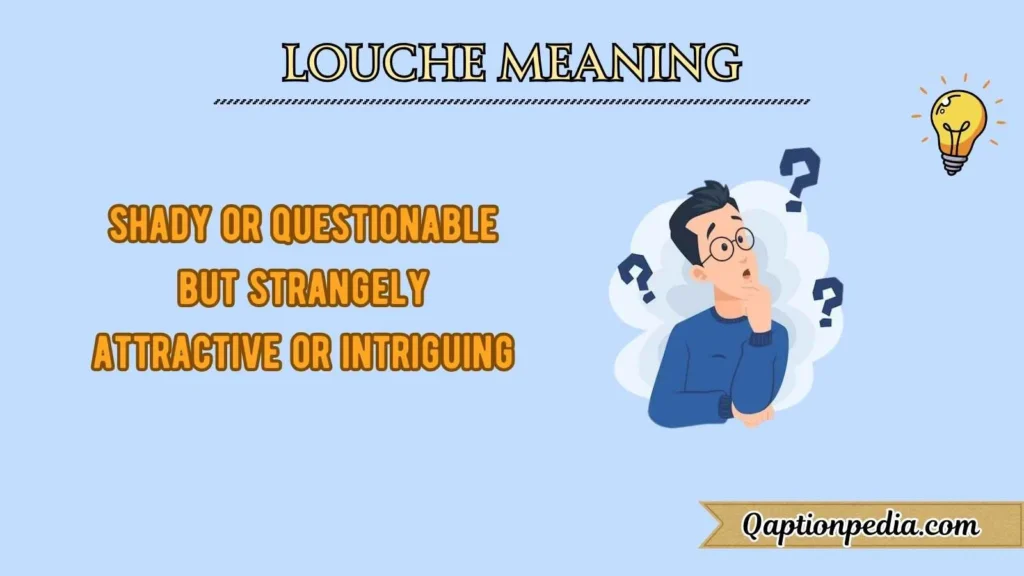
Louche is an adjective used to describe people, behavior, or aesthetics that appear disreputable, questionable, or morally dubious—yet often with a certain allure or sophistication. In simpler terms, it represents something shady but intriguing, a quality that is both suspicious and appealing.
For example, a person frequenting exclusive nightclubs with mysterious connections might be described as louche. It doesn’t imply outright criminality; rather, it signals that someone or something exists on the fringes of conventional respectability.
Key characteristics of louche:
- Slightly shady or suspicious
- Suggestive of dubious morals
- Often glamorous or attractive in an unconventional way
- Evokes curiosity or intrigue
Background & History
The word louche originates from French, where it literally means “squinting” or “shifty-eyed.” Over time, the term evolved into English usage to describe not just physical gestures but also a figurative sense of moral ambiguity. It gained popularity in English literature and journalism in the 19th and 20th centuries, often describing characters or social scenes that were glamorous yet morally questionable.
Historically, louche was applied to nightlife, fashion, and the social elite’s eccentric behaviors—think smoky cabarets, opulent parties, or intriguing strangers. This layered meaning explains why the word carries both negative and captivating undertones, allowing writers and speakers to paint nuanced portraits of personality or ambiance.
Usage in Various Contexts
Louche is versatile and appears in multiple contexts:
- Fashion: A louche outfit might combine elegance with a hint of rebellious style.
- Behavior: Someone charming but untrustworthy could be described as louche.
- Literature & Media: Authors use the term to create complex characters or describe morally grey settings.
- Social Situations: A person’s social circle, habits, or lifestyle might be considered louche if it flirts with scandal or ambiguity.
Its charm lies in describing things that are morally uncertain yet fascinating, making it useful for nuanced storytelling and social commentary.
Common Misconceptions & Clarifications
Many confuse louche with outright immoral or criminal behavior. While it implies suspicion, it doesn’t mean someone is necessarily bad or dangerous. Another misconception is that louche equals “lazy” or “sloppy,” which is incorrect; the term often implies intentional style or subtle audacity. Recognizing these subtleties prevents misuse in conversation or writing.
Similar Terms & Alternatives
Some alternative words or phrases related to louche include:
- Shady
- Disreputable
- Questionable
- Sordid
- Rakish
- Debauched
However, none fully capture the balance of allure and moral ambiguity that louche conveys, which makes it unique in modern English usage.
How to Respond to This Term
When someone is described as louche, it’s best to interpret context carefully. You might respond neutrally, acknowledging the person’s charm or charisma while recognizing the questionable undertones. In formal situations, avoid labeling someone louche unless the context clearly warrants a descriptive observation.
Regional or Cultural Differences
Louche carries slightly different weight depending on region or culture. In Europe, it may lean more literary or stylistic, while in North America, it can be colloquial, used in casual social commentary. Awareness of local nuances ensures accurate and appropriate usage.
Comparison with Similar Terms
Unlike words such as “shady” or “suspicious,” which are mostly negative, louche maintains a sense of intrigue or attraction. Compared to “rakish,” louche is more morally ambiguous rather than overtly playful or adventurous. Its nuanced meaning makes it particularly valuable in literature, journalism, and social observation.
Usage in Online Communities & Dating Apps
On social media and dating apps, louche often describes profiles or personalities that are mysterious, unconventional, or slightly edgy. A user might say someone’s style or behavior is louche, hinting at allure combined with subtle risk. Understanding this usage helps avoid misinterpretation in casual digital interactions.
Hidden or Offensive Meanings
While largely descriptive, louche can carry a subtly judgmental undertone if used negatively. For example, calling a coworker louche could imply distrust or disapproval. Context is key, as the word may seem playful or literary in some settings but critical or offensive in others.
Suitability for Professional Communication
In professional contexts, louche should be used cautiously. It may suit creative writing, marketing, or journalism but could be misinterpreted as unprofessional or judgmental in corporate emails or formal business communication.
FAQs:
What does louche mean in simple words?
It describes someone or something slightly shady, morally ambiguous, but intriguing.
Is louche positive or negative?
Mostly neutral with negative undertones; it suggests questionable behavior but often with allure.
Can louche describe fashion?
Yes, outfits or styles can be called louche if they’re edgy, unconventional, or slightly scandalous.
Where does the word louche come from?
It comes from French, meaning “squinting” or “shifty-eyed,” later evolving into English for moral ambiguity.
Can I use louche in professional writing?
Only in creative, literary, or descriptive contexts; avoid using it in formal business communication.
How is louche used online?
It often describes mysterious or unconventional personalities on social media or dating apps.
Conclusion:
The term louche offers a rich, nuanced way to describe people, fashion, and behavior that are morally ambiguous yet captivating.
With French origins and a literary history, it conveys charm, sophistication, and intrigue alongside suspicion.
Understanding the louche meaning allows speakers and writers to communicate subtle observations with precision, whether in social commentary, literature, or casual conversation.
By mastering its usage, one can describe complex personalities and situations in a single, elegant word.