Ion Meaning In Slang is a trendy phrase you’ve probably seen in texts, TikTok comments, and social media captions — but its real meaning can be confusing for many users. This guide explains the Ion Meaning In Slang in a simple, clear, and engaging way so you can understand it instantly. Learn how the Ion Meaning In Slang is used in everyday online conversations.
The Ion Meaning In Slang usually comes from casual speech and represents shortened language used in modern digital culture. It reflects how people talk naturally, fast, and informally online. In this article, you’ll discover the real meaning, usage style, and examples of Ion Meaning In Slang in real-life context.
Definition & Meaning
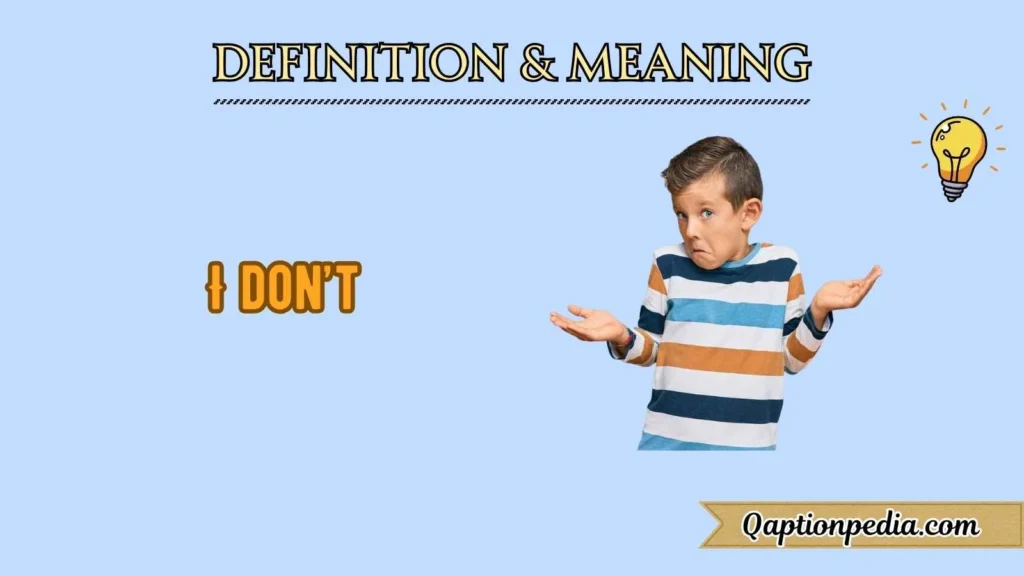
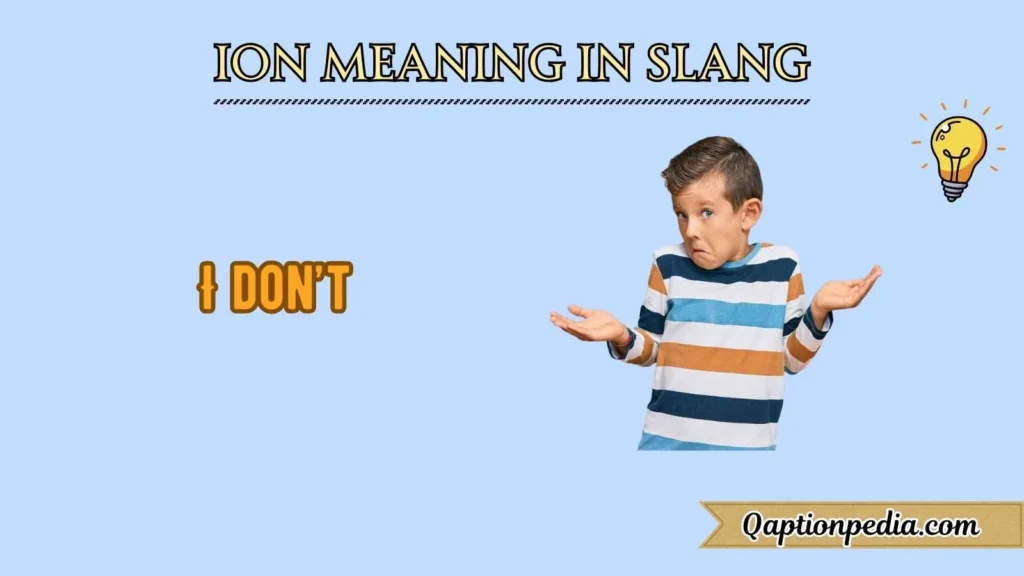
In slang, ion is a shortened form of “I don’t”.
It’s commonly used in casual digital communication to express refusal, disinterest, denial, or emotional detachment.
Examples:
- “Ion care” → I don’t care
- “Ion like that” → I don’t like that
- “Ion want it” → I don’t want it
It’s not just a shortcut—it reflects tone, attitude, and mood. Depending on context, it can sound playful, serious, sarcastic, or cold.
Background & History
The slang form of “ion” originated from African American Vernacular English (AAVE) pronunciation patterns, where “I don’t” naturally sounds like “ion.” Over time, this phonetic speech style moved into text culture through SMS, social media, and rap lyrics.
With the rise of TikTok and viral content, Ion Meaning In Slang became mainstream, spreading across different communities and age groups. What started as cultural speech evolved into a global digital expression.
Usage in Various Contexts
Ion is used in multiple social situations:
- Casual chat: “Ion know about that”
- Emotional expression: “Ion feel okay today”
- Rejection: “Ion want drama”
- Sarcasm: “Ion believe you 😂”
- Indifference: “Ion care anymore”
Its flexibility makes it one of the most adaptable slang terms online.
Common Misconceptions & Clarifications
Many people confuse slang “ion” with:
- Scientific ion (charged particles)
- Greek suffix -ion
- Tech abbreviations
Clarification:
Slang ion has no scientific or technical meaning. It is purely informal digital language.
Similar Terms & Alternatives
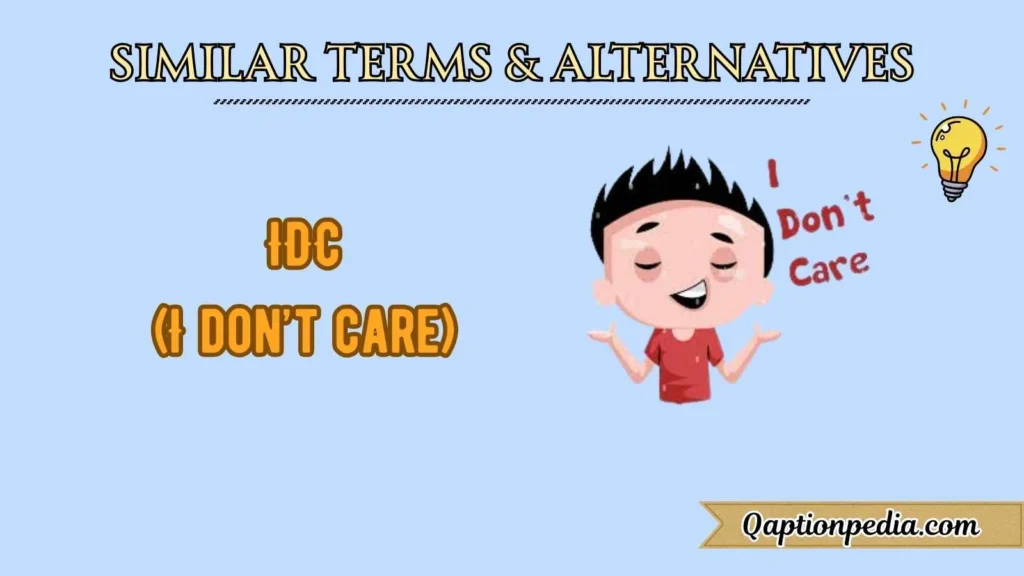
Common alternatives include:
- “IDK” (I don’t know)
- “IDC” (I don’t care)
- “Ain’t”
- “Nah”
- “Don’t”
These convey similar emotions but with different tones and cultural styles.
How to Respond to This Term
Response depends on tone:
- If casual → Reply casually
- If emotional → Respond empathetically
- If sarcastic → Match tone
- If dismissive → Change topic politely
Understanding intent matters more than the word itself.
Regional or Cultural Differences
In the US, especially urban communities, “ion” is normal slang. In other regions, people may not understand it or may confuse it with science terms. Cultural exposure to social media determines familiarity.
Comparison with Similar Terms
| Term | Tone | Style |
|---|---|---|
| Ion | Casual, emotional | Informal slang |
| I don’t | Neutral | Standard English |
| Ain’t | Cultural slang | Informal |
| Nah | Direct | Casual |
Usage in Online Communities & Dating Apps
On platforms like TikTok, Instagram, Snapchat, and dating apps:
- “Ion do drama”
- “Ion play games”
- “Ion chase”
It reflects personality, boundaries, and emotional standards.
Hidden or Offensive Meanings
“ion” itself is not offensive.
However, tone + context can make it sound:
- Dismissive
- Cold
- Disrespectful
- Emotionally distant
It’s emotionally expressive, not abusive.
Suitability for Professional Communication
❌ Not suitable for:
- Emails
- Work chats
- Business communication
- Academic writing
✅ Only for:
- Informal chats
- Social media
- Personal messages
FAQs:
What does ion mean in slang?
It means “I don’t” in casual digital language.
Is ion a real word?
No, it’s slang, not a dictionary word.
Is ion rude?
Not by itself—tone and context decide that.
Is ion used worldwide?
Mostly popular in online and Western digital culture.
Can ion be used in formal writing?
No, it’s strictly informal.
Why do people use ion instead of I don’t?
It’s faster, expressive, and fits casual texting culture.
Conclusion:
Ion Meaning In Slang represents how digital culture reshapes language.
It’s more than just a shortcut—it’s a reflection of emotion, identity, and online expression.
From social media to private chats, “ion” has become a powerful informal tool for communication.
Understanding its meaning helps you avoid confusion, respond correctly, and communicate naturally in modern digital spaces.
Language evolves, and “ion” is a perfect example of how spoken culture becomes written slang in the internet era.