Last updated on January 31st, 2026 at 08:25 am
Ion Meaning In Slang has become a popular phrase among teens and social media users, but many people are still confused about what it actually means. If you’ve been scrolling through TikTok, Instagram, or Twitter, you’ve probably seen someone type “ion” in a comment or caption and wondered, “What does that even mean?”
Understanding Ion Meaning In Slang can help you stay in the loop and sound more relatable online. In this article, we’ll break down the definition, examples, and context so you know exactly how to use ion like a pro in your everyday chats.
Definition & Meaning
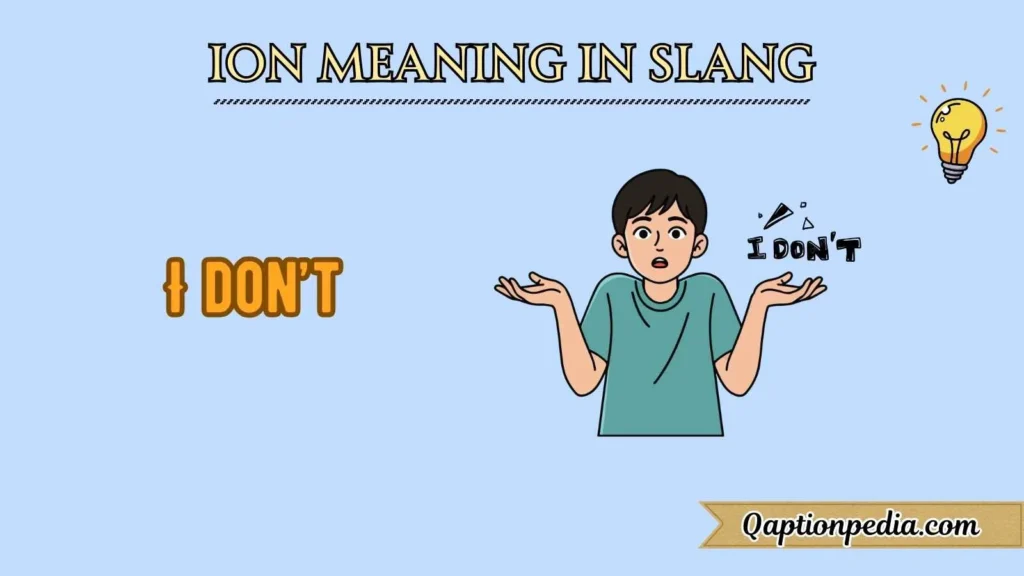
In slang, “ion” is a shorthand form of “I don’t,” primarily used in casual texting or online conversations. For example, someone might say:
“Ion care about that”
Which translates to:
“I don’t care about that.”
It is often used to express disinterest, dismissal, or detachment. The term has gained traction because it’s quick, concise, and fits naturally into fast, conversational messaging. Beyond its literal meaning, ion can convey tone and attitude, sometimes implying sarcasm, annoyance, or even passive indifference.
Background & History
The use of ion as slang originates from the trend of shortening phrases in texting and online communication. Abbreviating words and phrases helps save time, especially in character-limited platforms like Twitter. While its exact origin is unclear, ion became widely recognized on platforms like TikTok, Snapchat, and Twitter around the late 2010s. Influencers and meme culture accelerated its adoption among teenagers and young adults. Interestingly, while ion is primarily informal, its appeal lies in its flexibility—it can be used in casual conversations without sounding harsh, depending on context and tone.
Usage in Various Contexts
Ion is versatile and appears in multiple scenarios:
- Casual conversation: “Ion feel like going out tonight.”
Translation: “I don’t feel like going out tonight.” - Humor or sarcasm: “Ion even know why we’re arguing.”
Used sarcastically to dismiss a situation. - Online forums and social media:
Often used to react to trends, opinions, or memes: “Ion tryna deal with that drama.”
Its informal nature makes it ideal for text messages, social media captions, and group chats but less appropriate for professional or academic settings.
Common Misconceptions & Clarifications
A common misunderstanding is assuming ion refers to “ion” from science. While the spelling is identical, the slang term is context-dependent. Another misconception is treating ion as a misspelling or typo—it’s intentionally abbreviated to match digital communication trends. Understanding context is key; tone, platform, and user intent define whether ion expresses genuine disinterest, sarcasm, or humor.
Similar Terms & Alternatives
Other informal abbreviations convey a similar meaning:
- IDK → “I don’t know”
- IDC → “I don’t care”
- IDGAF → “I don’t give a…”
While these phrases overlap with ion, the latter is shorter and slightly more casual, often giving a lighter or less aggressive tone than alternatives like IDGAF.
How to Respond to This Term
Responding depends on context and tone:
- If ion signals disinterest: accept it and move on.
- If it’s sarcastic or humorous: reply with humor or a lighthearted comment.
- Avoid taking offense unless clearly directed as rude.
Regional or Cultural Differences
The popularity of ion varies by region:
- United States: Most commonly used among teens and young adults.
- UK & Canada: Seen occasionally in text messaging but less widespread.
- Other countries: Rare, mostly found in online global communities or influenced by American social media trends.
Cultural context can affect tone; in some areas, ion might feel more dismissive or informal than intended.
Comparison with Similar Terms
Compared to IDK or IDC, ion is more flexible and conversational. Unlike IDGAF, it doesn’t carry a harsh or confrontational tone. Its brevity makes it ideal for quick messaging without appearing rude.
Usage in Online Communities & Dating Apps
On platforms like TikTok, Discord, Snapchat, and Instagram, ion is often paired with memes or trends. In dating apps, it can signal casual disinterest or set boundaries subtly:
“Ion looking for anything serious right now.”
Understanding this helps avoid miscommunication and interpret tone accurately.
Hidden or Offensive Meanings
Generally, ion is not offensive. However, tone and context can make it dismissive or passive-aggressive. Misreading it can lead to misunderstandings, but in most cases, it’s harmless shorthand.
Suitability for Professional Communication
Ion is strictly informal. Using it in emails, presentations, or workplace communication can appear unprofessional or confusing. Reserve it for casual chats with peers or friends.
FAQs:
What does ion mean in texting?
It means “I don’t,” used to show disinterest or dismissal.
Can ion be rude?
Sometimes, depending on tone, but it’s usually casual and harmless.
Is ion only used online?
Mostly, yes, but some people use it in speech casually.
How do I respond to ion?
Match tone: casual, humorous, or neutral depending on context.
Is ion the same as IDK?
No, IDK means “I don’t know,” ion means “I don’t.”
Can adults use ion?
Yes, but mostly in informal settings like social media or messaging.
Conclusion:
Ion Meaning In Slang .The slang term ion has become a key part of modern digital communication, especially among teens and young adults.
While it may seem confusing at first, its meaning—“I don’t”—is simple once you understand context and tone. Recognizing ion helps navigate social media, texting, and online conversations more smoothly.
Unlike more aggressive abbreviations, ion offers a casual, non-confrontational way to express disinterest, sarcasm, or humor.
Staying updated on such slang ensures clearer communication, avoids misunderstandings, and keeps interactions relevant in today’s fast-moving online culture.