Fw Meaning is a term you’ve probably seen in texts, emails, or social media, but do you really know what it stands for. Understanding Fw Meaning can help you communicate more clearly and avoid confusion in digital conversations. This guide will break down the exact meaning and common uses of Fw.
In today’s fast-paced messaging world, knowing Fw Meaning is more important than ever. Whether you’re forwarding emails or chatting online, learning how to use Fw Meaning correctly makes your messages sharper and more professional. By the end, you’ll easily grasp the purpose and context of Fw in everyday communication.
Definition & Meaning
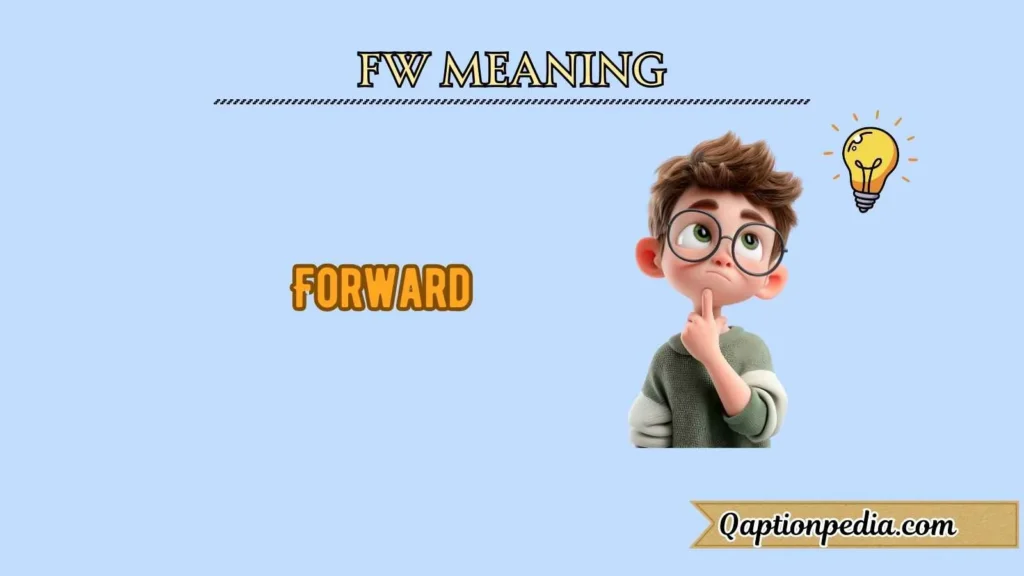
FW is a versatile abbreviation, and its meaning can vary depending on the context. In digital communication, FW typically stands for “Forward”, especially in emails or messaging apps, where it indicates that a message has been passed on from one person to another. For instance, in emails, the subject line often includes “FW:” to show it is a forwarded message.
In casual texting or social media, FW can also mean “F* With”**, a slang term implying that someone likes, trusts, or is okay with another person. For example, “I fw your style” means “I like or respect your style.” The versatility of FW is why people frequently look up its meaning to understand the intended tone in conversations.
Background & History
The abbreviation FW originated with email culture in the early 1990s. As email became a standard communication tool, shorthand terms like FW (forward) and RE (reply) emerged to streamline messages. Its use spread quickly to instant messaging platforms and texting, where brevity is appreciated.
The slang usage of FW as “F* With”** gained popularity more recently through social media, hip-hop culture, and online forums. Influencers, musicians, and internet communities helped popularize it, making it a common expression among younger audiences. Understanding both historical and modern uses of FW is key to interpreting it correctly in different messages.
Usage in Various Contexts
FW is widely used across multiple settings:
- Emails: “FW” signals a forwarded message. Example: FW: Meeting Notes for Tomorrow.
- Texting & Social Media: Used to show approval or agreement. Example: I fw that idea!
- Professional Chat Apps: Mostly means forwarded content but can be misread if slang is used.
- Gaming & Online Forums: Can indicate agreement, support, or acknowledgment.
This flexibility makes FW context-dependent. Understanding the conversation and sender is crucial to grasping its intended meaning.
Common Misconceptions & Clarifications
One common misconception is that FW always represents a vulgar term. In professional or formal communication, FW almost always stands for “Forward”. Using it incorrectly in such settings may cause confusion. Another misunderstanding arises in casual slang contexts, where someone might misinterpret FW as a negative or offensive remark. Context is key to avoiding miscommunication.
Similar Terms & Alternatives
Other abbreviations similar to FW include:
- RE – Reply
- FWM – F*** With Me (slang)
- FYI – For Your Information
- FWD – Forwarded (alternative email term)
Knowing these terms helps readers navigate emails, chats, and social media conversations more effectively.
How to Respond to This Term
Responses depend on context:
- In emails: No direct response needed; simply read the forwarded content.
- In texting/slang: Acknowledge or reciprocate sentiment. Example: I fw that too!
- On social media: A casual reply with agreement, emoji, or reaction sticker works.
Being aware of context ensures a response aligns with the intended meaning of FW.
Regional or Cultural Differences
In English-speaking countries, FW in emails is universally understood as “Forward.” Slang usage is more prevalent in the US, Canada, and the UK, especially among younger people. In non-English speaking regions, FW may be less common or misunderstood, so extra context is often required. Awareness of cultural nuances helps prevent miscommunication.
Comparison with Similar Terms
Unlike RE (Reply), which asks for a response or feedback, FW simply shares information. Compared with FWM, which is personal and informal, FW in email settings is strictly neutral. Recognizing these distinctions prevents misuse in professional and casual communication.
Usage in Online Communities & Dating Apps
In dating apps or social media, FW often conveys interest or alignment. Example: “I fw you” signals attraction or liking. In online communities, it may indicate support or camaraderie. Users should be careful not to misinterpret FW, especially when communicating with someone unfamiliar.
Hidden or Offensive Meanings
While the standard email meaning is harmless, the slang interpretation of FW can carry a vulgar undertone. Phrases like “I fw you” are friendly or flirtatious, but some may find them inappropriate in professional or formal settings. Understanding audience and platform is essential.
Suitability for Professional Communication
- Emails: Perfectly suitable when indicating a forwarded message.
- Texting with colleagues: Use caution; slang may be inappropriate.
- Social media: Casual and widely accepted among peers.
Professionals should stick to the email meaning and avoid slang versions in official communications.
FAQs:
What does FW mean in texting?
In texting, it often means “F*** With,” expressing liking or agreement.
What does FW stand for in emails?
In emails, FW stands for “Forward,” showing that the message is being passed on.
Is FW slang offensive?
It can be, depending on context; used casually, it usually means approval or support.
Can I use FW professionally?
Yes, in emails as “Forward,” but avoid slang in formal communication.
Is FW used worldwide?
Mostly in English-speaking regions; slang usage is less common elsewhere.
How should I respond to FW in messages?
Acknowledge the sentiment casually or continue the conversation, depending on context.
Conclusion:
The term FW meaning is versatile and widely used in both professional and casual communication.
Whether it appears in emails as “Forward” or in slang as “F*** With,” understanding context is critical.
Knowing its history, usage, and nuances ensures effective communication across emails, texting, social media, and online communities.
With this knowledge, you can confidently interpret FW and respond appropriately, avoiding confusion or unintended offense.