Last updated on January 31st, 2026 at 08:38 am
Feining Meaning Slang is a phrase you’ve probably seen online, but what does it really mean? In this guide, we break down the true meaning behind this popular expression and how it’s used in everyday conversations. Understanding the Feining Meaning Slang helps you keep up with modern language, social media trends, and casual chats.
Whether you’ve heard someone accuse a friend of feining or seen it pop up in comments, knowing the Feining Meaning Slang will make everything clearer. This article explores where it comes from, how people use it, and why it’s become such a buzzing term. Let’s dive in and uncover the Feining Meaning Slang in the simplest way.
Definition & Meaning
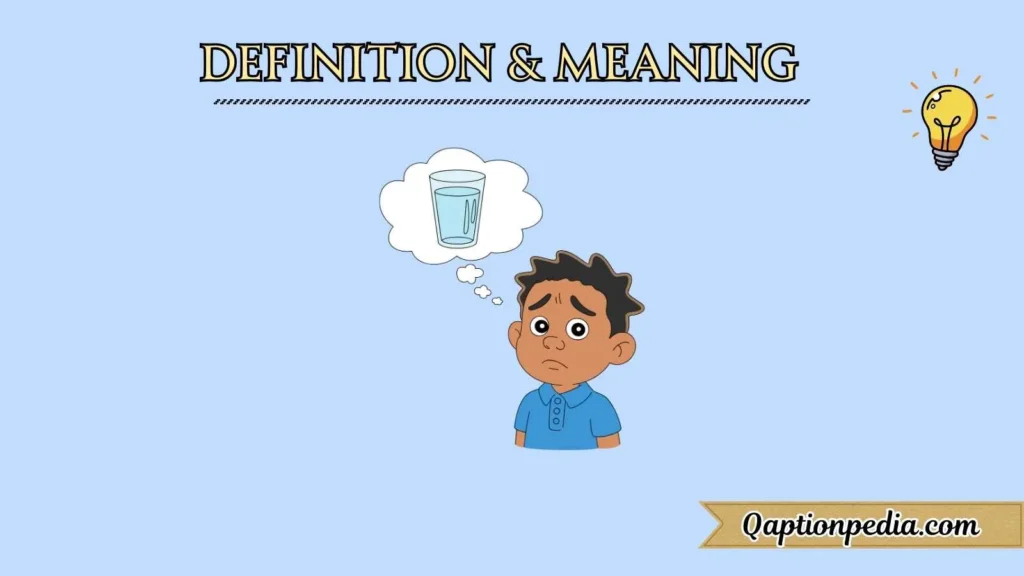
In slang, feining generally refers to someone acting overly eager, desperate, or excessively craving something—whether it’s attention, approval, food, or even material things. It’s often used to jokingly call out behavior that seems a bit too intense or enthusiastic.
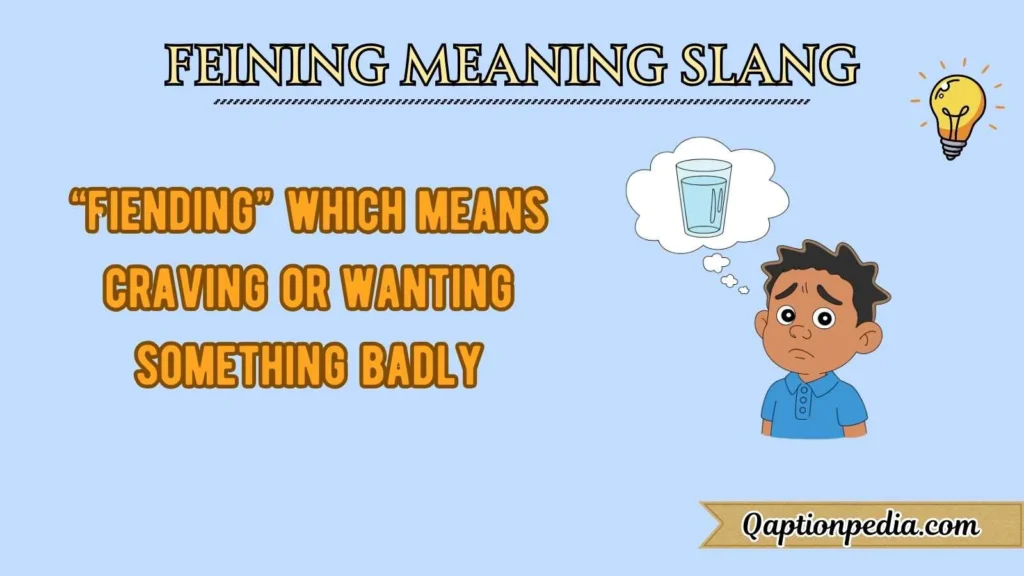
The term is commonly seen as a variation of “fiending,” which means craving or wanting something badly. Over time, pronunciation differences and regional speech patterns led to the spelling “feining.” While the core meaning stays similar, the tone is usually less serious and more playful depending on how it’s used.
Background & History
The roots of feining trace back to urban slang, particularly influenced by African American Vernacular English (AAVE). The original word, fiending, became popular through music, street culture, and everyday speech. As slang spread across communities and online spaces, the pronunciation shifted and alternative spellings appeared.
“Feining” became a common form in texting, social media captions, and memes, where spelling often mirrors how a word sounds rather than how it’s formally written. This transformation shows how slang naturally evolves through sound, convenience, and cultural exchange.
Usage in Various Contexts
1. Craving something:
“Stop feining for those fries.”
2. Seeking attention:
“She’s really feining for compliments today.”
3. Overly excited about something:
“He’s feining to see the new movie.”
4. Playful teasing:
Friends often use it jokingly to point out dramatic or exaggerated behavior.
5. Exaggerated desire in texting:
People use it to express strong interest without sounding too serious.
While the tone is often lighthearted, context matters. Depending on the situation, it can imply either harmless enthusiasm or slightly desperate behavior.
Common Misconceptions & Clarifications
- Misconception: “Feining” means addiction-related behavior.
Clarification: While related to “fiending,” the slang form is typically more casual and less serious. - Misconception: It is always offensive.
Clarification: Tone depends on delivery—among friends, it’s usually harmless. - Misconception: It’s a grammatically correct word.
Clarification: It’s strictly slang, not formal English.
Similar Terms & Alternatives
- Fiending – The root word with a stronger, more serious tone.
- Thirsty – Desperate for attention or validation.
- Jonesing – Strong craving, often used casually.
- Pressed – Overly eager or emotionally invested.
- Obsessed – Strong fixation, sometimes exaggerative.
How to Respond to This Term
If someone says you’re feining, your response can vary depending on tone and relationship:
- Playful reply: “Okay, maybe I am a little!”
- Light denial: “I’m not feining, I just really want it.”
- Clarification: “What makes you think that?”
- Humorous comeback: “I’m passionate, not feining.”
Respond casually unless the conversation feels negative.
Regional or Cultural Differences
Slang shifts across regions, so feining might not be universally recognized. In many areas, fiending is the more familiar term, while “feining” appears more in texting or youth speech. Cultural communities that embrace AAVE or urban slang tend to use it more often. Online communities also adopt unique variations depending on trends and memes.
Comparison with Similar Terms
Compared to words like thirsty or pressed, feining specifically highlights intensity or craving. “Thirsty” focuses more on attention-seeking, while “pressed” implies emotional sensitivity. Feining sits in the middle—it can express enthusiasm, desire, or attention seeking depending on the context.
Usage in Online Communities & Dating Apps
On dating apps or social platforms:
- It may refer to someone being too eager to message or meet.
- Users often use it jokingly to call out excessive interest.
- Memes frequently exaggerate “feining” behavior for comedic effect.
Because tone isn’t always clear online, it can sometimes lead to misunderstandings.
Hidden or Offensive Meanings
While feining isn’t inherently offensive, it can sound negative if used to criticize someone’s behavior. It may imply desperation or lack of self-control. In some contexts, it may be perceived as mocking. As with most slang, delivery and intent matter more than the word itself.
Suitability for Professional Communication
Feining is not suitable for professional or formal settings. It’s casual slang, informal in tone, and easily misunderstood across cultures. In workplaces, stick to clear language such as “eager,” “excited,” or “very interested.”
FAQs:
1. What does feining mean in slang?
It means acting overly eager, craving something, or wanting attention.
2. Is feining the same as fiending?
They are related, but “feining” is a casual, spelled-how-it-sounds variation.
3. Is feining a real word?
No, it’s an informal slang term.
4. Is feining disrespectful?
It can be, depending on tone, but is often used playfully.
5. Where is the term commonly used?
Mostly in social media, urban slang, and youth conversations.
6. Can I use feining in school or work?
It’s better to avoid it in professional or academic environments.
Conclusion:
The slang term feining is a playful yet expressive way to describe someone who seems intensely eager or craving something.
While it stems from urban speech and follows the evolution of casual language online, it remains informal and context-dependent.
Understanding how and when to use it helps avoid confusion while keeping communication fun and relatable.
As slang continues to grow, words like feining showcase how language adapts, shifts, and reshapes itself in the digital age.