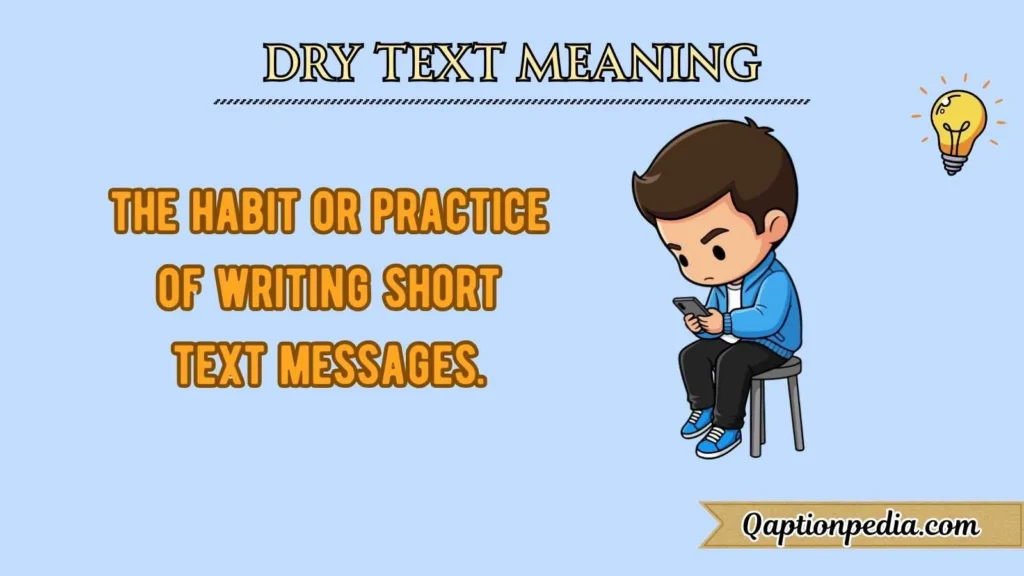
Dry Text Meaning refers to a style of messaging where replies feel short, emotionless, or uninterested, often lacking emojis, enthusiasm, or extra explanation. In everyday chats, people use dry texts without realizing how they may sound to the receiver. Understanding the Dry Text Meaning helps you avoid confusion in conversations.
Dry Text Meaning is commonly discussed in texting culture, social media, and modern relationships, where tone matters a lot. A dry text doesn’t always mean rudeness—it can signal busy schedules, mood, or personality. Knowing the Dry Text Meaning makes communication clearer and more stress-free.
Definition & Meaning
Dry Text Meaning describes messages that are minimal, blunt, or lacking emotional expression. These texts usually contain very few words, no emojis, and little to no engagement. They don’t encourage conversation and often feel like the sender is replying out of obligation rather than interest.
Dry texts are not always negative. Sometimes they simply reflect a person’s mood, personality, or situation. However, in many cases, they are perceived as signs of disinterest, boredom, or emotional distance.
Background & History
The concept behind Dry Text Meaning emerged with the rise of instant messaging and social media. As texting replaced face-to-face conversations, people began relying on tone indicators like emojis, punctuation, and length. Over time, short replies became associated with lack of effort.
Slang culture on platforms like WhatsApp, Instagram, and Snapchat popularized the term “dry texting,” especially among younger users navigating digital relationships and dating.
Usage in Various Contexts
Dry texts appear in many situations. In friendships, they may signal someone is busy or distracted. In romantic conversations, dry replies are often interpreted as loss of interest. 🤔 In professional settings, short texts may simply reflect efficiency.
The Dry Text Meaning changes depending on context, relationship type, and communication norms between the people involved.
Common Misconceptions & Clarifications
A common myth is that dry texts always mean dislike. This is not true. Some people are naturally brief communicators. Others may be tired, stressed, or multitasking.
Another misconception is that dry texting is intentional. In reality, many people don’t realize how their messages sound to others.
Similar Terms & Alternatives
Terms similar to Dry Text Meaning include:
- Cold replies
- One-word responses
- Low-effort texting
- Short replies
These phrases describe the same idea but vary slightly in tone and usage.
How to Respond to This Term
If someone is dry texting you, avoid immediate assumptions. You can:
- Ask open-ended questions
- Match their energy calmly
- Give them space if needed
If you’re accused of dry texting, adding a few extra words or emojis can instantly change how your message feels.
Regional or Cultural Differences
In some cultures, short messages are normal and polite. In others, expressive texting is expected. The Dry Text Meaning can differ greatly depending on regional communication styles and social norms.
Comparison with Similar Terms
Dry texting differs from ghosting. Ghosting means no replies at all, while dry texting still involves responses—just without enthusiasm. It also differs from blunt communication, which may be direct but not emotionally distant.
Usage in Online Communities & Dating Apps
On dating apps, Dry Text Meaning is often taken seriously. Short replies may be seen as lack of attraction or interest. In online communities, dry texts might simply mean someone prefers reading over chatting.
Hidden or Offensive Meanings
Dry texting itself is not offensive, but repeated dry replies can feel dismissive. In some cases, it may be used intentionally to push someone away without direct confrontation.
Suitability for Professional Communication
In professional communication, dry texts are often acceptable. Brief, clear replies can be seen as efficient rather than rude. Context and tone expectations matter greatly here.
FAQs:
What does dry text mean?
It means short, emotionless messages that lack engagement or warmth.
Is dry texting always negative?
No, it can simply reflect personality, mood, or busyness.
Why do people dry text?
Common reasons include stress, disinterest, or a preference for brief communication.
Is dry texting rude?
Not always. It depends on context and relationship expectations.
How can I avoid sounding dry?
Use complete sentences, emojis, or ask follow-up questions.
Does dry texting mean someone is losing interest?
Sometimes, but not always—context is key.
Conclusion:
Understanding Dry Text Meaning helps decode modern digital communication.
While dry texts can feel confusing or hurtful, they don’t always signal negative intent. Context, personality, and situation all play major roles.
By recognizing these factors, you can respond more thoughtfully, avoid overthinking, and communicate more clearly.
In a world driven by messages, awareness of tone makes all the difference.